

The Salvation Army Mrs. W.H. Wei Memorial School, Hong Kong
Project Archives
Time
Location
Design Perspective: When a "Hardcore Robot" Meets "Ink and Paper"
This project aims to transform the campus space into an educational and entertaining environmental laboratory. Utilizing the high ductility of corrugated and honeycomb paperboards, we broke the limitations of traditional campus decoration to create educational scenes with strong visual impact.
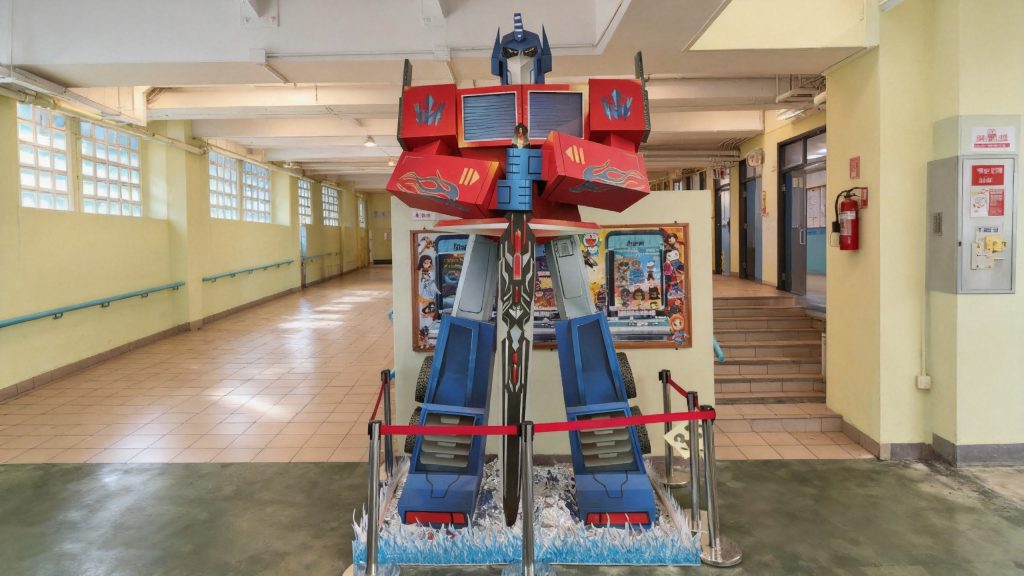
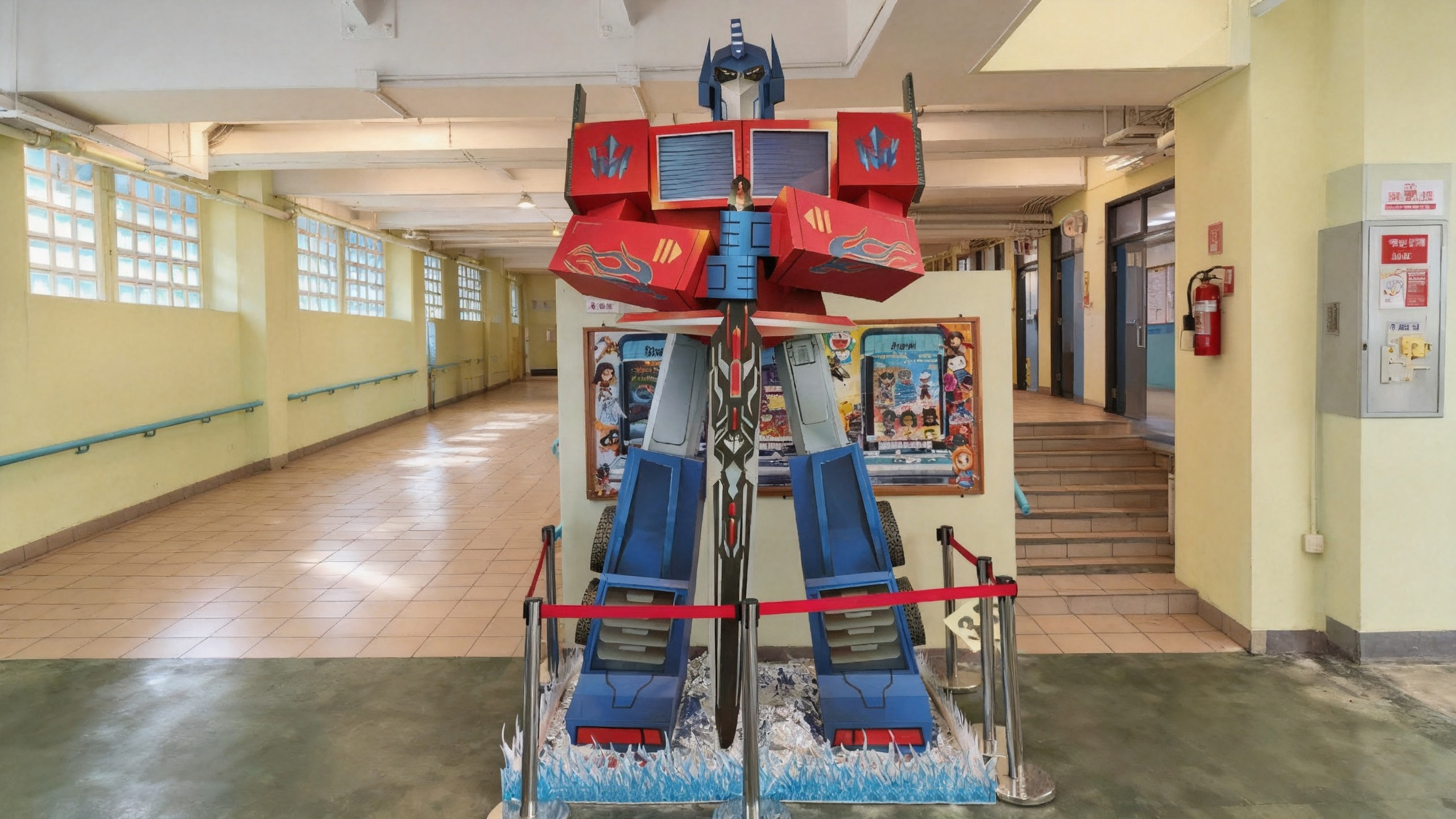
Stunning Landmark: Giant "Optimus Prime" Paper Art Installation
Structural Ingenuity: The installation was entirely modeled using high-strength honeycomb paperboard, with precise die-cutting and interlocking techniques to recreate the complex lines and sense of power of the mecha.
Visual Communication: The highly recognizable blue and red color scheme and the pose holding a blade not only made it a technological landmark on campus but also symbolized the environmental mission of “guarding our green home.”
Immersive Scenarios: Aerospace and Science Themed Classrooms
Aerospace Dream Zone: We designed large paper-based rocket-shaped display shelves and robot-shaped furniture, using a light blue color scheme to stimulate students’ imagination.
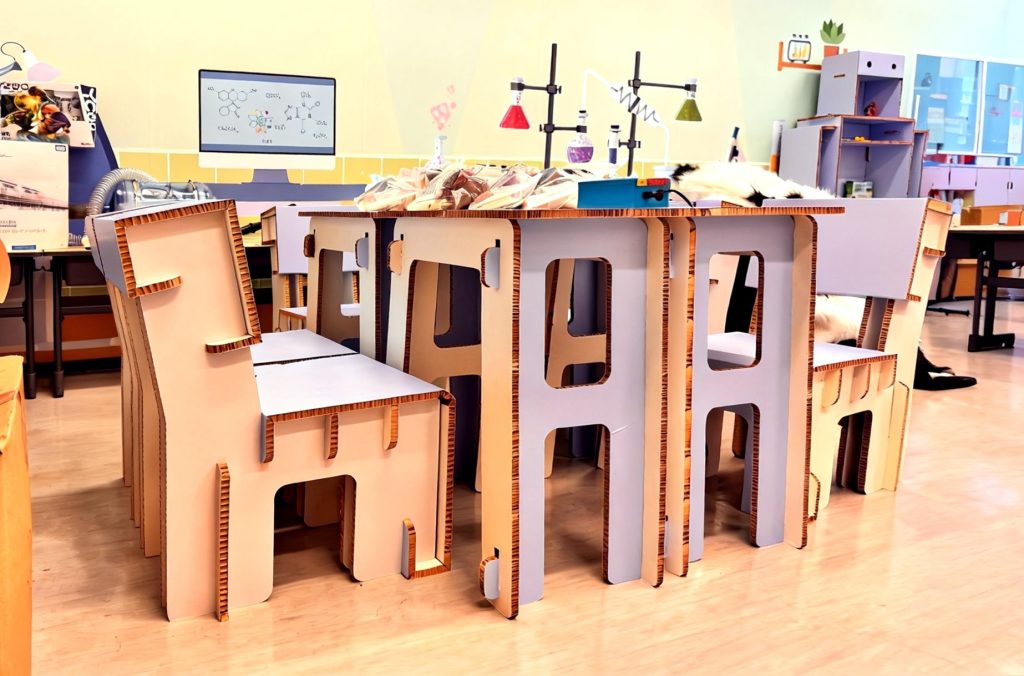
Science Experiment Zone: The walls were decorated with hand-painted style laboratory elements. All desks, chairs, and storage cabinets adopted a lightweight paper-based design.
Ergonomics: Specially developed curved paperboard lounge chairs (in purple-blue series) utilized a scientific wave-like structure to distribute stress, providing comfortable and resilient seating, demonstrating the mature application of paper-based materials in functional furniture.

Core Highlight: A School-Wide "Green Public Lesson"
Teacher-Student Co-creation: The furniture and displays in the themed classrooms were assembled through modular interlocking, guided by the principal and teachers and completed by the students, much like building with blocks.
Environmental Awareness: Through the process of touching, folding, and building, the students intuitively experienced the remarkable strength and low-carbon properties of the new paper-based materials, understanding the concept of “replacing wood with paper.”
Intangible Cultural Heritage Integration: A “Wei Li Intangible Cultural Heritage Hall” display area was also established within the classroom, organically blending paper art technology with traditional cultural education and achieving a cross-disciplinary collaboration between cultural heritage and modern design.